Monday, 16 May 2022

Focus On: Elaine May’s ‘Mikey and Nicky’

Mikey and Nicky (Directed by Elaine May)
Elaine May is a writer and filmmaker and actor and improviser, but beyond that, she is an artist whose career-long quest for truth has driven her to create work that has taken many forms but always sought to cast aside the easy crutches of cliché and convention to express something profound and real about the human condition.

She first exploded into the public consciousness in the late 1950s, as one half of Nichols and May. She and Mike Nichols were the smartest of the smart set, selling albums hand over fist and changing comedy with their sophisticated long-form improvisation. They were less interested in setups and punch lines than in exploring the complexity, wonder, and absurdity of the world we live in.

After the duo broke up, May wrote plays and dabbled in movies, first as an actor and later as a filmmaker. After costarring in Luv (opposite Jack Lemmon and future Mikey and Nicky star Peter Falk) and Carl Reiner’s Enter Laughing (both 1967), May not only adapted the short story on which the brilliant 1971 dark comedy A New Leaf is based and directed the film but was also heartbreaking and hilarious as its female lead, Henrietta Lowell, a daffy botanist and heiress who is on a more cerebral and sublime frequency than the rest of us. She’s so irresistible that Henry Graham, a W. C. Fields–like misanthrope played by Walter Matthau, abandons his plan to murder her for her money. That, in May’s world, is a happy ending: a man maturing beyond his desire to kill a woman oblivious enough to want to spend the rest of her life with him.


A New Leaf could have been a star-making film for May as an actor. She was deservedly nominated for a Golden Globe for best actress in a comedy or musical. Yet (though she occasionally acts to this day) she chose a different path, continuing her directorial career with another discomfiting study of human nature. Lenny Cantrow (Charles Grodin), the protagonist of May’s The Heartbreak Kid (1972), isn’t out to kill anybody, but he’s murderously callous about breaking the heart of his vulnerable new wife, Lila (Jeannie Berlin, May’s daughter)—on their honeymoon, no less—in order to pursue the shiksa goddess Kelly Corcoran (Cybill Shepherd). This painfully hilarious cult classic doubles as a potent allegory for Jewish assimilation. Lenny gets the girl, but this outcome registers more as tragedy than triumph. It’s a “happy ending” that’s actually achingly sad: getting what he wants most in the world is probably the worst thing that could happen to Lenny.

As a director, May specializes in deeply nuanced portrayals of intense, complicated relationships, just as she did in her groundbreaking stage work with Nichols and May. Where other filmmakers might cut away to give audiences room to breathe, May remains close to her dramatis personae in ways that are sometimes uncomfortable for audiences and characters alike. She is adept at getting viewers to empathize with the prickly, complex antiheroes she creates with such care and craft. In The Heartbreak Kid, for example, she pits the Waspy mortification of Eddie Albert’s patriarch against Grodin’s sweaty Jewish desperation and then ratchets up the tension and unblinking awkwardness to levels both hilarious and borderline unbearable.

May is keenly attuned to the often fraught relationships between men and women as well, but her sharpest focus is on the grubby desperation of male schemers controlled by greed, by lust, by a need to realize their seedy, selfish goals at any cost. Presented from the perspective of these profoundly flawed men, her films are all, on some level, explorations of the world of masculinity, with all its foibles and messy contradictions.


Her genius for finding the squirmy humanity within toxic characters finds its purest and most heartbreaking expression in Mikey and Nicky, on which filming began in 1973 but which wasn’t released till 1976, following all manner of ill will and out-and-out warfare between May and Paramount, the studio that financed the film. At one point, May even hid reels of her own footage so that Paramount could not wrest it from her and release the movie in a bastardized form.

Mikey and Nicky is in many ways May’s first drama, but it can just as easily be described as her darkest and most penetrating comedy. Then again, May seems profoundly uninterested in glib dichotomies like comedy and drama, hero and villain, good and bad, friend and foe. Her obsession is with people and relationships, which rarely fit into such tidy categories.

In search of a new kind of emotional realism, May shot for far longer than planned, and often left the camera running long after a scripted scene had ended, pushing her collaborators and herself in obsessive pursuit of a tricky and delicate cinematic vision. You can practically feel the prolonged shooting schedule in the overwhelming air of exhaustion that hangs heavy over Mikey and Nicky, the sense that we’re entering a long, sad story at its weary end.


We begin, appropriately enough, in total darkness, accompanied by the reassuring white noise of city street sounds—Mikey and Nicky is as bracingly dark visually as it is thematically. May’s film is Godfather-like in its comfort with shadows and darkness. In it, nighttime isn’t just a time of day, it’s a world unto itself, one that its title characters have been haunting long before the events of the film.

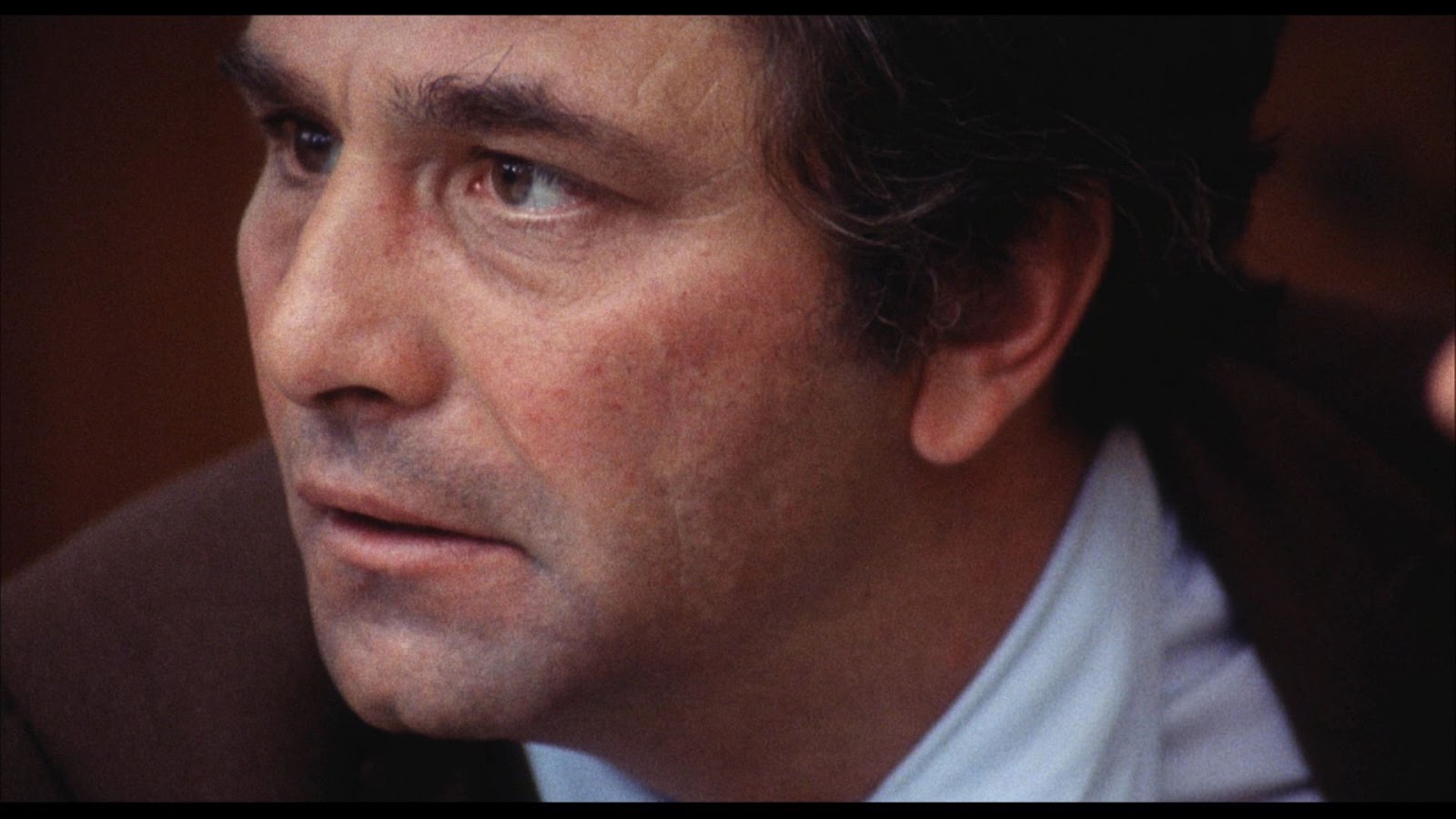
Nicky (John Cassavetes), a low-level Philadelphia bookie who is hiding out after stealing from a crime boss, is deeply, deeply tired but also sick—with fear that his luck and his time on earth are both running out, and also with an ulcer born of too much stress and too little self-care. He is marinating in his own sweat, paranoid, holed up in a dingy hotel room in desperate need of help and human kindness. He seems to have burned every other bridge, so he calls on Mikey (Peter Falk), one of his oldest and most dependable friends, to help save him from the hit man he is convinced is after him.

To be a man in Mikey and Nicky is less a condition than an affliction, but before Mikey lashes out with incoherent violence, there is tremendous sweetness in the way he treats his friend, in the way he holds him in his arms while Nicky weeps over the seemingly intractable jam he finds himself in. The warmth and kindness Mikey shows his friend at a low ebb in what appears to be a lifetime full of them makes the inevitable betrayal to come even more devastating.


As a film actor, Cassavetes’s impact and influence rank with those of Marlon Brando. Like Brando, he specialized in raw, violent tenderness—see his turn as the grieving, carousing family man Gus in his own Husbands (1970), for example. He was a macho bruiser of a performer, but beneath Nicky’s anger and incoherent, drunken rage lies a powerful hunger for connection, for salvation. Cassavetes begins the film in a place of weary, scared, wired, vibrating intensity that he maintains to the bitter end. He’s burning with desperation even in his most hushed moments.

In other words, he gave his costar plenty to play off. Falk’s idiosyncratic delivery, dry humor, and quiet intelligence as a performer are most famous from his television role as the rumpled detective Columbo, which he took on right around the same time he met Cassavetes, in 1967, and kept for nearly four decades. It was Falk who passed May’s Mikey and Nicky script to Cassavetes, though they would end up shooting Cassavetes’s Husbands and A Woman Under the Influence (1974) together first. In all three films, Falk plays some version of a family man in whom tenderness and violence perpetually struggle for the upper hand. In Mikey, he has the less showy but arguably more challenging role, as a nurturer who cannot show his true face to his old friend without exposing the simultaneously deadly and banal betrayal at the film’s core.


Part of Mikey and Nicky’s dark night of the soul involves a feverish, self-defeating pursuit of sex. Nicky’s wife has kicked him out, and in his desperation and horniness, he has fallen into a poignantly pathetic sexual relationship with the fragile Nell (Carol Grace, devastatingly vulnerable and sad in one of her only film performances). The scene involving her plays like a warped burlesque of heterosexual courtship, with all of the niceties and formalities stripped away, leaving only a lonely woman’s desperate need for affection, no matter how disingenuously offered, and a man’s beastlike need to satisfy his urges. It’d be a moment of visceral awkwardness even if Mikey did not afterward try to have sex with Nell himself, and erupt into violent rage when his seduction attempt is rejected. If you’re a woman in this milieu, you are hated and abused for putting out too easily but punished for not putting out at all. Mikey’s reaction is all the more shocking coming from a character who has up to this point served as Nicky’s conscience, and from an actor as inveterately warm and innately likable as Falk.

The artfulness of May’s direction, meanwhile, lies in its relative invisibility. Like Cassavetes, she is more invested in capturing the underlying emotional reality of a scene than in flashy camera movement or ostentatious visual style. It is all about serving the actors and the moment. And it is a testament not only to the spontaneity and rawness Cassavetes and Falk bring to their roles and to their lived-in chemistry but also to that patient direction—as well as to May’s tough, naturalistic script—that Mikey and Nicky’s dialogue often feels as immediate as if it were improvised in the moment, though virtually none of it was.


For the film’s titular duo, this is a night unlike any other: an endgame, a bleak reckoning. For everyone else, however, it’s just another night. That’s true even of Kinney (Ned Beatty), the man hired to kill Nicky. The same year Mikey and Nicky was barely released, Beatty devoured the screen as a verbose evangelist for big business in Network. Cinema is full of colorful hit men, but Beatty and May upend expectations by crafting a portrayal that bears no trace of the pyrotechnics of his Network performance, making his gunman as unremarkable as possible. He’s just an ordinary guy with an unusual occupation, who goes about his deadly business with a grudging sense of obligation no different, really, from that of an insurance salesman eager to make his quota.

In one of the film’s most quietly incisive moments, Kinney grouses that, after expenses, he’ll barely make any money killing Nicky. Forget morality or legalities: in the sad, sorry world of Mikey and Nicky, where everyone has a price, killing barely even makes sense from an economic perspective.

For Kinney, killing a man he knows only from a photograph is strictly business. For Mikey and Nicky, however, everything is intensely, painfully personal. The same was obviously true of May when she stubbornly birthed this masterful, darkly comic exploration of toxic masculinity through a combination of prickly genius and indefatigable force of will. This was her first wholly original script, based on a play she’d started writing decades before and inspired by real people she’d encountered during her youth. Not to mention the fact that A New Leaf had been taken from her and recut by Paramount, and she had no intention of letting that happen again.


It’s not too much of a stretch to say that the short-fingered vulgarians at Paramount took a hit out on Mikey and Nicky, creatively speaking. They did not understand the movie, nor could they control its strong-willed auteur, so they tried to kill it by taking it out of her hands.

In October 1975, the studio filed a lawsuit against May, claiming ownership of the film, kicking off a series of suits and countersuits between the director and Paramount for control. At one point, the studio sued her and her husband at the time, David Rubinfine, for criminal contempt after he allegedly smuggled some of the film to a colleague to keep it out of Paramount’s hands.

May was finally able to finish an edit of Mikey and Nicky in time for a Christmas 1976 opening, but the release was token at best. The film’s saga was far from over, however. In 1978, May, along with Falk and former Paramount executive Julian Schlossberg, bought the movie back from the studio, and they rereleased it to a more appreciative audience several years later.

Despite her success as a screenwriter and sought-after script doctor on films like Heaven Can Wait (1978), May ended up paying a huge price personally and professionally in an industry where men who fight to realize their vision are considered inspirational while women who do the same are considered “difficult” and cited as grim cautionary tales. She was given the opportunity to direct only one more feature, 1987’s Ishtar, and even that only through the intercession of the film’s producer and star, Warren Beatty.


In many ways, Mikey and Nicky fits perfectly into the uncompromising milieu of the New Hollywood of the late sixties and seventies, with its unrelenting darkness, moral ambiguity, and focus on troubled, unlikable dwellers on the grubby fringes of American society. It is unique, however, in being a major New Hollywood film written and directed by a woman (unbelievably, May was only the third woman to direct a Hollywood film in the sound era). It’s even more unusual in that it’s the furthest thing from what Hollywood would consider a women’s movie, then or now. It’s as insightful about masculinity as Cassavetes’s own dramas about the often ugly world of men.

Perhaps that’s why it has taken the movie so long to be appreciated and seen. A woman ventured boldly into cinematic territory long considered the exclusive domain of men. To the folks in the executive suite, it did not seem to matter that May had made a masterpiece, only that she had made a movie that would be hard to package for a mass audience, even in the heady days of the midseventies.

May set out to use her genius and the overlapping brilliance of Cassavetes and Falk to articulate brutal, profound truths about the joy, horror, and complexities of human experience, as illuminated by the strange codes of a certain subset of insecure, violently overcompensating, crime-prone American men, and a tortured conception of friendship as a messy combination of hatred, love, and everything in between. She succeeded spectacularly, and Mikey and Nicky is an essential reminder that great, deeply personal art endures long after commercial considerations have been rightfully consigned to history.

– Nathan Rabin: Mikey and Nicky: Difficult Men. 

Article here

Monday, 9 May 2022

John Cassavetes: Under the Influence

A Woman Under the Influence (Directed by John Cassavetes)
John Cassavetes wrote A Woman Under the Influence (1974) primarily to provide his wife Gena Rowlands with a significant role. Initially envisioned as a trilogy of interconnected plays, the theatrical possibilities seemed intimidating considering Rowland's Mabel character's emotional and physical demands; one single film would suffice. After convincing the American Film Institute to name him filmmaker-in-residence, providing him with access to equipment and facilities, and providing students with on-the-job training— all of which was provided for free — production on one of Cassavetes' most successful films began shortly thereafter. 

Nick's (Falk) and, particularly, Mabel Longhetti's chaotic lives is instantly apparent as she scrambles to prepare for a night alone with her husband. For the first of many times, one wonders whether there is a true reason for the mayhem, whether Mabel reacts with self-induced terror, or whether the fear stems from an underlying medical problem. Mabel is the first Cassavetes character to exhibit clinical insanity. Her childish spontaneity and unpredictability contribute to the unease in her relationship with Nick. Meanwhile, as sincere as Nick may be in his own way, he lacks the emotional capacity for genuine care and understanding. Mabel is challenged about her condition and committed, but Nick becomes increasingly deranged, irresponsible, and deadly in the days that follow. When Mabel is not present, a clear co-dependency emerges. 

A Woman Under the Influence contains several passages of extraordinary tenderness, complete with genuine companionship, fumbling, and sensitivity. Simultaneously, Nick's incapacity to comprehend Mabel's condition results in explosive aggression and threats of violence. He dominates Mabel by being gruff, impatient, and even brutally honest, while she is brimming with vitality and excitement. Mabel is thus a prototypical Cassavetes character, one who reflects the director's own style of filmmaking. As with Cassavetes' movies, she creates unsettling scenarios, yet as though abandoning the urge for analysis that Cassavetes frequently employed with his films, one of Nick's most egregious errors with Mabel is to rationalise her behaviour. While Cassavetes claims that Mabel's unease is unsurprising, adding, "I don't cast 'totally competent' women in my films because I don't know any 'completely competent' people,"15 Carney also draws connections to his own autobiography. If Moskowitz embodies Cassavetes' swagger, Mabel embodies his self-doubts, uncertainties, and sorrows, he writes. 

A Woman Under the Influence concludes with a shaky acclimation process for both the spectator and the protagonists. However, as with Faces and Husbands' unresolved conclusions, the question of whether anything has been accomplished remains. Have Mabel and Nick confronted the underlying nature of their marital and psychological conflicts? Though there is no straightforward resolution, the film's conclusion is satisfying, if only because it establishes a state of respite in which, despite the mayhem, love persists. Cassavetes' work, as Carney puts it, is "stunningly hopeful....[he] never abandoned the promise of possibility." A Woman Under the Influence strikes the ideal balance between Cassavetes' continually erratic style and a more linear causal progression. As an obvious showcase for Rowlands, the picture has a solitary star focus, and it got two Academy Award nominations, for her and for Cassavetes as director, in large part due to her exceptional performance.

“If there’s one quality that separates John Cassavetes’s movies from almost everybody else’s, it’s the density of detail in the storytelling. His films need to be read closely, from beginning to end. There are no lulls with Cassavetes, no lapses in rhythm; the films aren’t broken down the way most are. You have to apprehend them from gesture to gesture, breath to breath. Very few filmmakers in the sound era have chosen to work this way, at least in the realm of fiction. Only Carl Theodor Dreyer, of whom Cassavetes was a great admirer, comes to mind. This is not to slight filmmakers with a different approach to their art, who either break up their scenes in clearly articulated units (Alfred Hitchcock, Robert Bresson), build tableau effects that take the action into an eerie timelessness (Stanley Kubrick), isolate a certain visual or behavioral event as the focal point of a given shot (Jean Renoir), or dig into the marrow of time to make an event out of duration itself (Andy Warhol, Andrei Tarkovsky). Every approach is equally valid, none more elevated than the rest. Die-hard Cassavetes devotees do him no favors when they buy into his own pronouncements and claim that his methods allowed him a greater purchase on the truth (whatever that is) than other filmmakers. “My films are the truth,” he once said during a personal appearance with a filmmaker of my acquaintance; needless to say, my acquaintance was more than a little put off. Yet such pretentiousness is easily forgiven in a man like Cassavetes, just as it’s easy to make allowances for the pomposity contained within Bresson’s book of maxims. When you consider how far against the grain they both went, it’s understandable that they would each accord their own idiosyncratic working methods the status of scientific breakthroughs or archaeological finds.”

– Kent Jones.

In the following extracts John Cassavetes discusses the personal and creative process that led to the writing of his masterpiece A Woman Under the Influence.

I absolutely wrote A Woman Under the Influence to try to write a terrific part for my wife. Gena wanted to do a play. She was always complaining we’re living in California, she loves the theater and everything. Gena really wanted to do a play on Broadway. And I had always fancied that I could write a play. She wanted something big. She said, ‘Now look, deal with it from a woman’s point of view. I mean deal with it so that I have a part in this thing!’ And I said, ‘OK,’ and I went off and had been thinking about it for a year anyway. And I had taken seven or eight tries at bad plays and came up with this play, which was not the play that the movie was, but it was based on the same characters.

And Gena read it and said, no, she wouldn’t do it. And I’m very stubborn so I didn’t realize that she liked the part but that on the stage, to play that every night, would kill her. I had no concept of that because we’re all obsessed, everyone’s obsessed, that is, in this stupid thing. And so I wrote another play on the same subject with the same characters, deepening the characters and making it even more difficult to play. And I gave it to Gena and she said, ‘I like that tremendously. I like the first one too, but I don’t think I could do that on Broadway.’ So I wrote another play, and so now there were three plays! And I took them to New York and I got a producer to produce the plays on Broadway and I thought it was a terrific idea to do these three plays on consecutive nights with matinees, see? [Laughs.] And Gena’s not a particularly ambitious woman in the trade, as it goes. Although, if she sees a good part, she’ll kill herself for it, but I mean kill herself performing it, but not getting it. I mean, it’s either given to her, or she’ll play with the kids or do something else or go out. When Gena read the plays she said, ‘No one could do this every night!’ She feared they would take her to a sanitarium if she became that keyed up over a long period of time! So then I said, well, all right, let’s try to make it a movie.


I can’t just go out and make what I want. I have to go through a whole big process of crap, talking to people and talking to people, proving to them that whatever we are going to do is going to make money. If I can prove it to them that my intentions are to make money, then they will let me make any film I want. But it becomes increasingly more difficult to tell them that since I’m not concerned with making money. You con people and you lie to them. You try to keep a little part of yourself when somebody says to you, ‘You figure it’s the greatest picture ever made?’ You try to keep a little part of yourself alive. So I went through all the processes of calling people in Wisconsin and Idaho and, you know, big industrialists, and trying to find out how to raise the money. And we couldn’t raise anything, not anything!

We had some readings of the play and started to work on the script and got involved in it. I have a definite person in mind when I write, which is why I like to work with people who are very close to me. I know the way they think, so I try – presume, if you will – to put down some of those thoughts, not in their own terms but in the character’s terms. I often get extremely close to someone’s real personal problems, but that’s our hope – no fictitious emotion. Knowing who the two central actors would be, I revised the screenplay. I wrote it for Peter Falk, as he would expect me to. I study his speech patterns and study the way he works, and how he really feels about it, and then start to write off that.

Gena tells everyone that it’s hard to live with me because there is nothing she can say that I don’t write down. I see Gena around the house and with the kids and I tape record what I see. I do tape record things and exaggerate them and blow them up and the incidents are not the same. I mean, I’m not a writer at all! I just record what I hear. As prattle. What people are concerned with in a day’s living. I have a good ear for prattle. Every line in your life is eaten up by the movies you do.


When I first start writing there’s a sense of discovery. In some way it’s not work, it’s finding some romance in the lives of people. You get fascinated with their lives. If they stay with you, then you want to do something – make it into a movie, put it on in some way. It was that which propelled us to keep on working at A Woman Under the Influence. The words kind of spell out the story in a mysterious way. I deal with the characters as any writer would deal with a character. There are certain characters that you like, that you have feeling for, and other characters stand still. So you work until you have all the people in some kind of motion.

Making a film is a mystery. If I knew anything about men and women to begin with, I wouldn’t make it, because it would bore me. I really feel that the script is written by what you can get out of it and how much it means to you. What the film is about is not deliberate in the original intention. I mean, I know that the subject is going to be a family. But I don’t know what my initial motivations are. You’re interested in where you’re going. The idea of taking a laborer and having him married to a wife whom he can’t capture is really exciting. I don’t know how you work on that. So I write – I’ll do it any way I can. I’ll hammer it out; I’ll kick it out; I’ll beat it to death – anyway you can get it. I don’t think there are any rules. The only rules are that you do the best you can. And when you’re not doing the best you can then you don’t like yourself. And that’s very individual with everyone.


The preparations for the scripts I’ve written are really long, hard, intense studies. I don’t just enter into a film and say, ‘That’s the film we’re going to do.’ I think, ‘Why make it?’ For a long time. I think, ‘Well, could the people be themselves, does this really happen to people, do they really dream this, do they think this?’ There were weeks of wrestling to get the script right. I knew hard-hat workers like Nick, and Gena knew women like Mabel, and although I wrote everything myself, we would discuss lines and situations with Peter Falk, to get his opinion, to see if he thought they were really true, really honest. The actors discussed the clothes the characters would be wearing, the influence of money on their lives, the lives of the children, why they sleep on the ground floor, etc. Everything was discussed, nothing came from me alone. We write a lot of things that aren’t in the movie, as background. So that when we got to the scene, you might rewrite on the spot, but we might have already gone in three, four, five, seven, eight, nineteen different versions of the scene.

I do a full and total screenplay and then the actors come to me and tell me what they don’t like. We get together for several weeks, in the evenings, for example, and read the script together. We get on well together, we’ve known each other and worked together for a long time. The actors come up with various suggestions and I ask them to write them down because sometimes I don’t understand what they are trying to say. Gena, for example, read the finished script and said, ‘I hate this woman. What does she do? What clothes does she wear?’ I replied that, at this stage, I didn’t care what she wore. But for her this is important; and she’s right, I had given a superficial response.


I try to get deeper into the characters and find out what the actors want to play. In what they want to play, somehow they’re adding to the film. They’re adding their own sense of reality and perceptions I wouldn’t know from my relatively limited point of view. It’s a necessary part of the process for me. If for me a line is right, I won’t let the actors change it, but will allow them latitude in interpretation.
After Minnie and Moskowitz, I thought, ‘All right, I would like to make a picture to really say something.’ The most important thing in my life, in Gena’s life and in the lives of our intimate friends was the idea of marriage. We were deeply concerned with the change in illusions that marriage engenders over a period of years and the overwhelming need to understand the problems of retaining the family. Out of that came the characters, the feelings for the characters and, in a more specific sense, the complex delineation of the woman in the film.

The film was born out of my despair and questioning of the meaning of my life. As I thought about this, and, later, during the filming, I became very conscious of certain problems that were unknown and foreign to me. I’ll use anything I can to straighten out a problem – even write a movie about it. When I finally saw the finished film, I was shocked by the reality of these problems.


Usually we put film in such simple terms while being endlessly involved in talking about our personal experience. We admit how complex it is. But it’s as though we never look into a mirror and see what we are. So the films I make really are trying to mirror that emotion so we can understand what our impulses are; why we do things that get us into trouble; when to worry about it; when to let them go. And maybe we can find something in ourselves that is worthwhile. Look at it this way: if I were writing a picture and I used a situation which none of us were involved in or interested in, then I’d feel ashamed about doing it – and so would everybody else. So I use absolutely everything I can find in our own lives, in our friends’ lives, to make what we’re doing interesting. But you’d better do it honestly, and you’d better cure all those personal problems that might be holding back something you want to say.

I don’t think audiences are satisfied any longer with just touching the surface of people’s lives; I think they really want to get into a subject.

Love within a family is a universal subject, but one that’s always treated lightly. We’ve learned to gossip about life instead of living it. A woman is either a married housewife who is happy or a married housewife who is unhappy. It’s not that simple. It is possible to be married and in love and unhappy too. And love fluctuates. Marriage, like any partnership, is a rather difficult thing. It has been taken rather lightly in the movies. Family life is so different than what has been fed into us through the tube and through radio and through the casual, inadvertent greed that surrounds us. Films today show only a dream world and have lost touch with the way people really are. For me the Longhetti family is the first real family I’ve ever seen on screen. Idealized screen families generally don’t interest me because they have nothing to say to me about my own life.


I spend months and years working out the philosophical intent of each picture. We create such problems in making a film by being so nuts as to say, ‘What’s underneath these characters? What are we really try- ing to say? Why are most movies so exploitative? Why don’t we go in and try to find out what people are really thinking? Even if we don’t know how to answer the question.’ The idea was to take all the experiences that I’ve had, all the family and love that’s been given, all the bitterness – to take all that and say, ‘OK, we’ve had all this,’ and put it all together.

In replacing narrative, you need an idea. What you do is take an idea that you have about a situation and then translate it into a dramatic situation that seems as normal as everyday life so the audience doesn’t see the idea. So it doesn’t show. Of course the idea itself has to be good – it really has to be first-rate. And the idea in A Woman Under the Influence was a concept of how much you have to pay for love. That’s kind of pretentious, but I was interested in it. And I didn’t know how to do it, and none of the other people knew how either, so we had to work extremely hard. But you have to deal with philosophic points in terms of real things. Children are real. Food is real. A roof over your head is real. Taking the children to the bus is real. Trying to entertain them is real. Trying to find some way to be a good mother, a good wife – I think all those things are real. And they are usually interfered with by the other side of one’s self – which is the personal side, not the profound, wonderful side. And that personal side says, ‘Hey, what about me? Yeah, you can’t do this to me.’ But if you’re in the audience, the audience is saying, ‘Hey, what about me?’ All the way through A Woman Under the Influence the characters are not thinking about themselves – and therefore the audience is allowed to ask that because the characters can’t. In that way, the film was a little unreal. Because in life people stop and say, ‘What about me?’ every three seconds.


I knew that love created at once great moments of beauty and that on the other hand it makes you a prisoner. It just seems to me that women are alone and they are made prisoner by their own love. If they commit to something then they have committed to it and it’s a torture. And it’s true. I mean, I see it in my relationship to Gena. Within such a system men have always been in a more favorable position – they are allowed to test themselves against the rest of the world since they are in contact with it. But I feel it too. A man feels that also. And nobody knows how to handle it. Nobody knows how to handle it.

This is complicated in turn by other characters and their lifestyles that come and go within the structure of the film. The interrelations between the characters must not be made too easy; like people in life, each presents unique problems, so that even though they come from the same class background and share similar experiences, problems still arise. To make sure it wouldn’t be sentimental, when I finished the script I crossed out all the references to love except one.

I think we’re just reporters, all of us basically. We report from a certain editorial point of view on what we feel, on what we see and on what is important to us. A story like this is not newsworthy really – it’s not Watergate, it’s not war; it’s a man and woman relationship, which is always interesting to me.

– Extract from Raymond Carney: Cassavates on Cassavetes.

Monday, 2 May 2022

Kurosawa on Kurosawa

Seven Samurai (Directed by Akira Kurosawa)
The great Japanese director Akira Kurosawa, described by Stephen Spielberg as ‘the pictorial Shakespeare of our time’, was famously reluctant to discuss his films . However, he opened up to critic Donald Richie in an interview first published in Sight & Sound magazine in 1964. Extracts were reprinted in July 2010 by way of an introduction to a season of Kurosawa’s films shown at the British Film Institute:

1. Sugata Sanshiro, 1943


Kurosawa’s debut feature, made when he was 33, is set in the late 19th century, and follows a country boy who comes to the city to study martial arts.

‘I remember the first time I said ‘Cut’ – it was as though it was not my own voice at all. From the second time on it was me all right. When I think of this first picture I remember most that I had a good time making it. And at this period it was hard to have a good time making films because it was wartime and you weren’t allowed to say anything worth saying. Back then everyone thought that the real Japanese-style film should be as simple as possible. I disagreed and got away with disagreeing – that much I could say.’

2. Drunken Angel, 1948


The film that brought Kurosawa and Mifune Toshiro together is a thriller about a hoodlum and an alcoholic doctor (his other great actor, Shimura Takashi).

‘In this picture I finally discovered myself. It was my picture: I was doing it and no one else. Part of this was thanks to Mifune. Shimura played the doctor beautifully, but I found that I could not control Mifune. When I saw this, I let him do as he wanted, let him play the part freely. I did not want to smother that vitality. In the end, although the title refers to the doctor, it is Mifune that everyone remembers.

‘His reactions are extraordinarily swift. If I say one thing, he understands ten. He reacts very quickly to the director’s intentions. Most Japanese actors are the opposite of this and so I wanted Mifune to cultivate this gift.

‘One of the reasons for the extreme popularity of this film at the time was that there was no competition – no other films showed an equal interest in people. We had difficulty with one of the characters: that of the doctor himself. Uekusa Jin and I rewrote his part over and over again. Still, he wasn’t interesting. We had almost given up when it occurred to me that he was just too good to be true – he needed a defect, a vice. This is why we made him an alcoholic. At that time most film characters were shining white or blackest black. We made the doctor grey.’

3. Rashomon, 1950


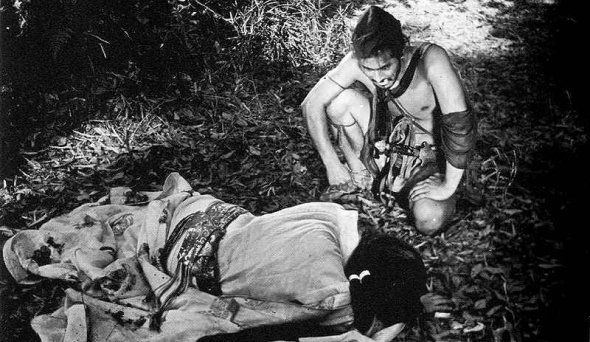
Kurosawa’s masterpiece about a rape and murder as seen from the conflicting perspectives of several characters brought Japanese cinema to the attention of international audiences when it won the Golden Lion at the Venice Film Festival in 1951.

‘I think Kyo Machiko was marvellous in the film... so forceful. And it took about a month of work to get that.

‘We were staying in Kyoto, waiting for the set to be finished. While there we ran off some 16mm prints to amuse ourselves. One of them was a Martin Johnson jungle film in which there was a shot of a lion roaming around. I noticed the shot and told Mifune that that was just what I wanted him to be.

‘At the same time Mori [Mori Masayuki, who plays Kyo’s murdered nobleman husband in the film] had seen downtown a jungle picture in which a black leopard was shown. We all went to see it. When the leopard came on Machiko was so upset that she hid her face. I saw and recognised the gesture – it was just what I wanted for the young wife.

‘I like silent pictures and always have. They are often so much more beautiful than sound pictures are. Perhaps they have to be. At any rate, I wanted to restore some of this beauty. I thought of it, I remember, this way: one of the techniques of modern painting is simplification, I must therefore simplify this film.

‘We had our share of troubles in making the picture. After one reel was edited there was a studio fire, and another one during dubbing. I’m not happy when I think back to those times. Also I did not know that the film was being sent to Venice. And it certainly would not have been sent if Giuliana Stramigioli [head of Unitalia Film] had not seen and liked it.’

4. The Idiot, 1951


Kurosawa followed ‘Rashomon’ with an adaptation of Dostoevsky’s novel. His long initial edit was heavily cut by Shochiku, and the film proved a commercial and critical failure.

‘I had wanted to make his film since before Rashomon. Since I was little I’d read Dostoevsky and had thought this book would make a wonderful film. Naturally you cannot compare me to him, but he is still my favourite author – he is the one who writes most honestly about human existence. And I think that when I made this picture I really understood him.’

‘People have said this film is a failure. I don’t think so. At least, as entertainment, I don’t think it is a failure.’

5. Ikiru (Living), 1952


Shimura Takashi gives an unforgettable performance as a bureaucrat who finds meaning in his life after learning he has cancer.

‘What I remember best here is the long wake sequence that ends the film, where from time to time we see scenes in the hero’s later life. Originally I wanted music all under this long section. I talked it over with Hayasaka [Hayasaka Fumio, the great Japanese composer who worked with Kurosawa and Mizoguchi] and we decided on it and he wrote the score.

‘Yet when it came time to dub, no matter how we did it, the scenes and music simply did not fit. So I thought about it for a long time and then took all the music out. I remember how disappointed Hayasaka was. He just sat there, not saying anything, and the rest of the day he tried to be cheerful. I was sorry I had to do it, yet I had to. There is no way now of telling him how I felt – he is gone.

‘He was a fine man. It was as though he (with his glasses) were blind and I was deaf. We worked so well together because one’s weakness was the other’s strength. We had been together ten years and then he died. It was not only my own loss – it was music’s loss as well. You don’t meet a person like that twice in your life.’

6. I Live in Fear, 1955


Kurosawa followed ‘Seven Samurai’ with this sombre film about an ageing man (played by Mifune) haunted by the prospect of nuclear war.

‘While I was making Seven Samurai I went to see Hayasaka, who was sick, and we were talking and he said that if a person was in danger of dying he couldn’t work very well. He was quite ill at the time, very weak, and we did not know when he might die. And he knew this too. Just before this we had had word of the Bikini [atomic] experiments. When he had said a person dying could not work I thought he meant himself – but he didn’t. He meant everyone: all of us.

‘As we [Hashimoto Shinobu, Oguni Hideo and Kurosawa] worked on the script we more and more felt that we were really making the kind of picture with which, after it was all over and the last judgement was upon us, we could stand up and account for our past lives by saying proudly: We made I Live in Fear. And that is the kind of film it turned into.’

7. Throne of Blood, 1957


Shakespeare is translated to 16th-century Japan in Kurosawa’s visually stunning adaptation of ‘Macbeth’.

‘I wanted to make Macbeth. The problem was: how to adapt the story to Japanese thinking. The story is understandable enough, but the Japanese tend to think differently about such things as witches and ghosts. I decided upon the techniques of the Noh, because in Noh style and story are one. I wanted to use the way Noh actors have of moving their bodies, the way they have of walking, and the general composition which the Noh stage provides.’

8. The Bad Sleep Well, 1960


Kurosawa made masterly use of widescreen in this contemporary story, an indictment of corrupt big business.

‘This was the first film of Kurosawa Production, my own unit which I run and finance myself. From this film on, everything was my own responsibility. Consequently I wondered about what kind of film to make. Making a film just to make money did not appeal to me – one should not take advantage of an audience. Instead, I wanted to make a film of some social significance. At last I decided to do something about corruption, because it has always seemed to me that graft, bribery et cetera on a public level is the worst crime that there is. These people hide behind the facade of some great organisation like a company or a corporation – and consequently no one ever really knows how dreadful they are, what awful things they do. Exposing them I thought of as a socially significant act – and so I started the film.

‘But even while we were making it, I knew that it wasn’t working out as I had planned, and this was because I was simply not telling and showing enough.’

9. Yojimbo, 1961


Mifune is at his most iconic here as a samurai who plays two rival factions of a small town off against each other. Sergio Leone famously stole the plot for ‘A Fistful of Dollars’.

‘The story is so ideally interesting that it’s surprising no one else ever thought of it. The idea about rivalry on both sides, and both sides are equally bad. We all know what this is like. Here we are, weakly caught in the middle, and it is impossible to choose between evils. It was truly an enormous popular hit. Everyone at the company said it was because of the sword-fighting. But that is not so – the reason was the character of the hero and what he does. He is a real hero, he has a real reason for fighting. He doesn’t just stand by and wave his sword around.’

10. High and Low, 1963


Kurosawa adapted Ed McBain’s novel ‘King’s Ransom’ for this riveting, influential thriller about a kidnap.

’Every picture I’ve done has come out of something that has happened to me personally. A friend of mine had a son kidnapped and that kind of barbarism upset me so that I made High and Low. Since then I’ve got lots of letters, people accusing me of teaching people how to go about kidnapping children, but that’s not what I meant. When it happened to him, it happened to me.’

11. Red Beard, 1965


Mifune’s final collaboration with Kurosawa sees him play a doctor in a rural clinic in late-19th century Japan who teaches an arrogant young intern the rewards of caring for the poor. The shoot lasted an exhausting two years.

‘I had something special in mind when I made this film because I wanted to make something… so magnificent that people would just have to see it. To do this we all worked harder than ever, tried to overlook no detail, were willing to undergo any hardship. It was really hard work and I got sick twice.’

12. Kagemusha, 1980


Kurosawa’s first film made in Japan since 1970’s ‘Dodes’ka-den’ was part-funded by 20th Century Fox, following the intervention of George Lucas and Francis Ford Coppola.

’I was in America for the Oscar ceremonies when I met George Lucas and Francis Coppola. They approached me and said that they’d learned a lot from my films. Lucas in particular said he would like to assist me in any way he could. At the time, I was trying to negotiate terms for the Kagemusha project with Toho, and we had reached a virtual standstill. Since it was the first time I had met them, I couldn’t tell them that I was lacking money for a project. But someone must have mentioned my problem to them, because they went to 20th Century Fox and persuaded Alan Ladd Jr to invest in the film in return for the rights outside Japan.’
(As told to Tony Rayns, 1981)

13. Ran, 1985


Kurosawa’s visually spectacular epic translated elements of Shakespeare’s ‘King Lear’ to 16th-century Japan.

‘What I was trying to get at in Ran – and this was there from the script stage – was that the gods or God or whoever it is observing human events is feeling sadness about how human beings destroy each other, and powerlessness to affect human beings’ behaviour.’
(As told to Michael Sragow, 1986)

– ‘Kurosawa on Kurosawa’. Sight and Sound magazine, July 2010. Original article here.